-
 Saul Loeb—AFP/Getty Images
-
 Pedro Pardo—AFP/Getty Images
-
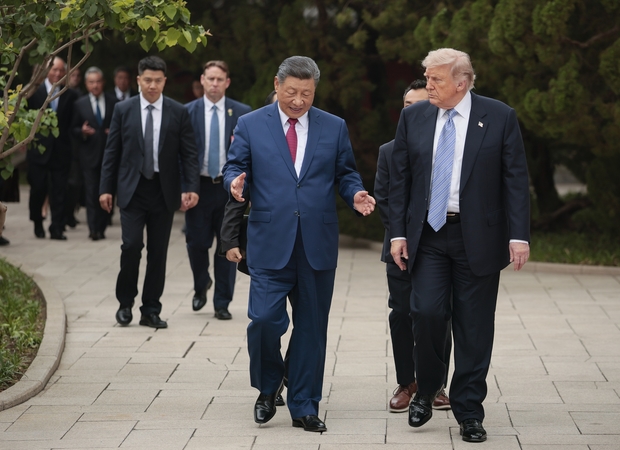 Evan Vucci—Pool/Getty Images
-
 Jeremy Goldkorn
-
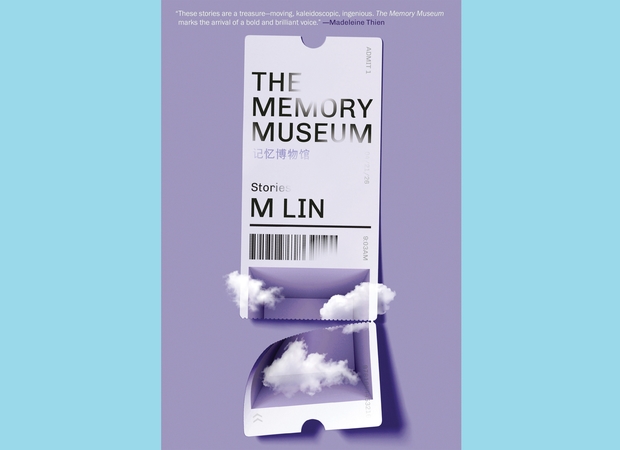 Courtesy of M Lin
-
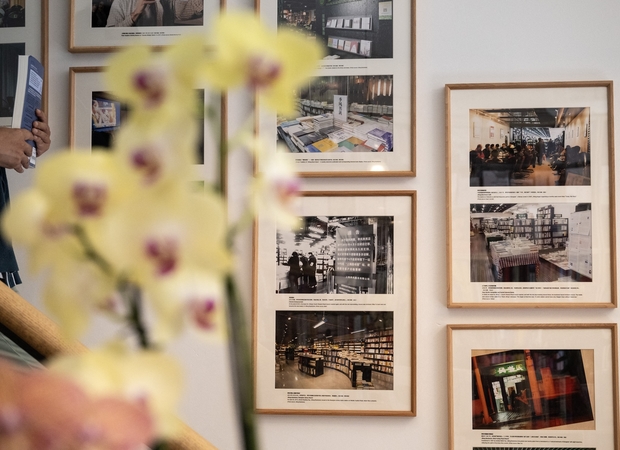 Drew Angerer—AFP/Getty Images
-
 Mahé Elipe
-
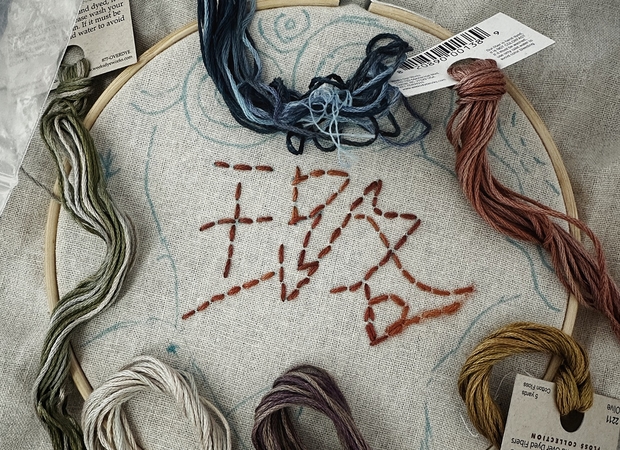 (Courtesy of Shen Lu)
Recent Stories
Conversation
06.12.26
Are There Any Good Ideas for AI Governance?
Aside from the nationalistic debates, are there any good ideas for AI governance and regulation emerging from the noise? What are the positive developments, if any, in China and in the U.S. when it comes to giving citizens the tools to help shape...
Features
06.02.26
Leaked Documents Show the Success of China’s VPN Crackdown
from Global Public Policy Institute
As long as Beijing has been censoring content online, people in China have been finding ways around that censorship. Such “wall-jumpers” used to have a relatively easy time getting their hands on the necessary digital tools. Often, this was in the...
Postcard
06.11.26
My Grandmother’s Hens
When I visited home in January, my grandmother showed love the way she always has, by offering to cook for me. I didn’t fully understand the amount of work that went into preparing and cooking eight dishes at once until I started my monthly supper...
Features
06.02.26
ASEAN’s U.S.-China Balancing Act Is Getting Much Harder
This balancing act is becoming substantially harder, as two opposing forces, which have hardened over the past year, are reshaping Asia’s economic landscape. The first is the Trump administration’s tariff and economic security agenda, which has...
Features
03.06.26
Censorship Is Not Deterring Global Adoption of Chinese AI
China tech watchers have quickly pointed that Chinese LLMs face an obstacle almost guaranteed to hinder its capability and potential to compete with similar Western products: censorship. But DeepSeek and other Chinese AI companies have proven they...
Media
02.18.26
Hǎi Profile: A Conversation with Jiaoying Summers
Jiaoying Summers is a stand-up comic who is packing theaters around the U.S., and last year premiered a one-hour comedy special on Hulu. With three and a half million followers across TikTok, Instagram, and YouTube, she owes much of her success to...
Media
11.04.25
ChinaFile Presents: ‘Made in Ethiopia’
Filmed over four years of intensive interviews and unique access, Made in Ethiopia lifts the curtain on China’s historic but misunderstood impact on Africa, and explores contemporary Ethiopia at a moment of profound crisis. The film throws audiences...
Features
06.30.25
The Locknet: How China Controls Its Internet and Why It Matters
Most people know that China censors its internet. They’ve probably even heard of the “Great Firewall,” the clever moniker popularly used to describe that censorship. But despite its increasing impact on our online lives, most people outside China...
Features
11.12.24
Trains: A Chinese Family History of Railway Journeys, Exile, and Survival
Every morning, I crossed a stretch of railway tracks on the way to my school. The tracks lay less than a hundred meters from the school gate, and a train often appeared in the late afternoon just as we were discharged. Sometimes it was a freight...
Explore the Site
The NYRB China Archive
01.10.12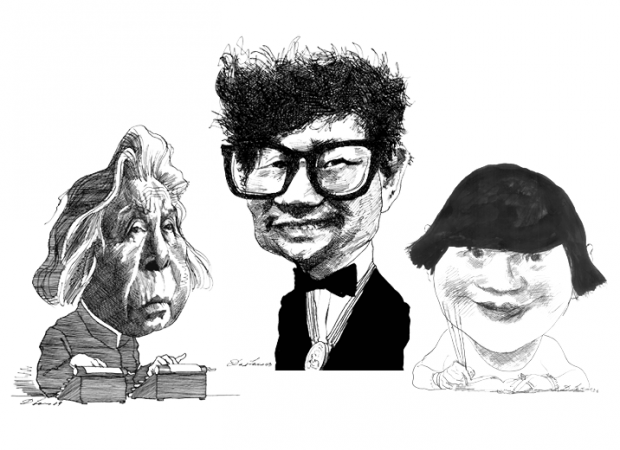
The New York Review of Books China Archive
from New York Review of Books
Welcome to the New York Review of Books China Archive, a collaborative project of ChinaFile.org and The New York Review of Books. In the archive you will find a compilation of full-length essays and book reviews on China dating from the Review'...
Photography & Video
Video
10.31.17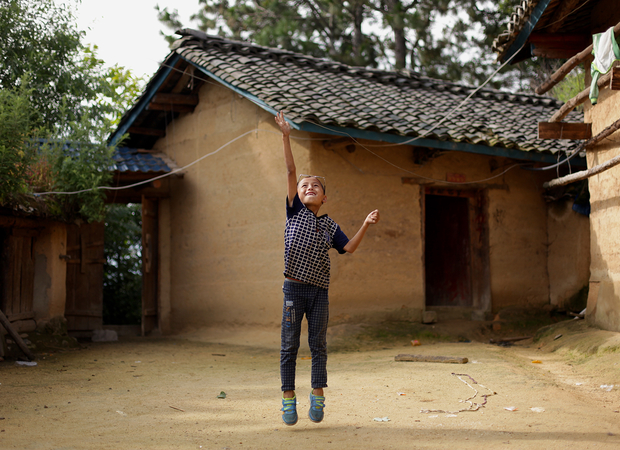
Down From the Mountains
At 14 years old, Wang Ying doesn’t want to be a mother. She scowls darkly as her younger brother and sister squabble in the corner while she does the housework. But she grudgingly cleans up after them and cooks them a potato stew, which they eat...
Photo Gallery
07.12.16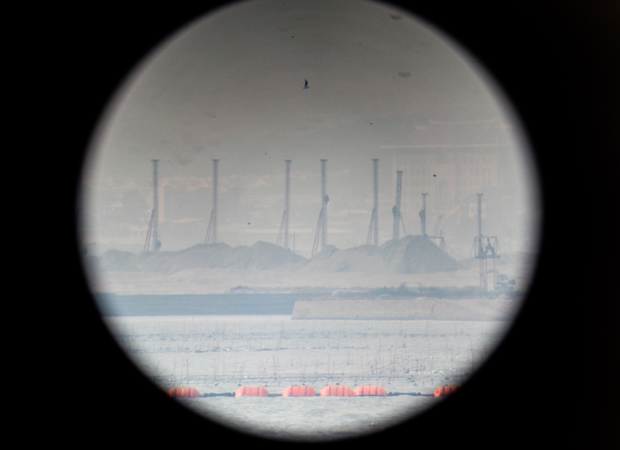
A Cold War Island Thaws
Mounds of sand sit beneath a row of pile drivers on Dadeng Island, where the Chinese city of Xiamen is building a new airport on reclaimed land.Syril Hung sighs, awe-struck by this scene. The retired editor is looking through a pair of binoculars...
Photo Gallery
10.05.16
Beijing’s Skinheads
from Jiemian
Punk, as with most modern Western rock music, took root in China abruptly and unevenly starting in the early 1990s. Beijing skinhead Ma Ke—pictured here with a teardrop temporary tattoo—was born in 1976, around the same time as punk itself. One of...
Books
Books
02.24.20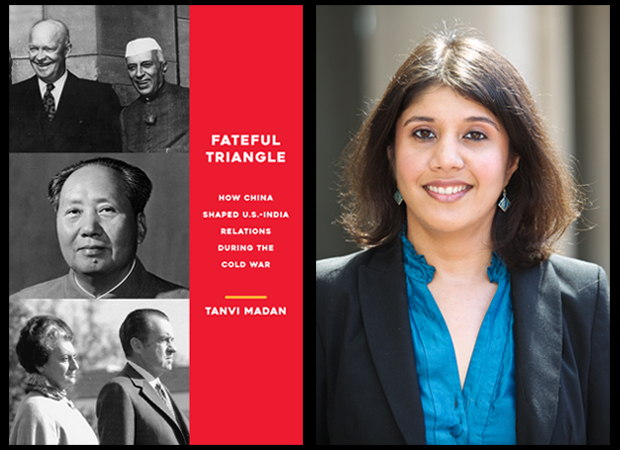
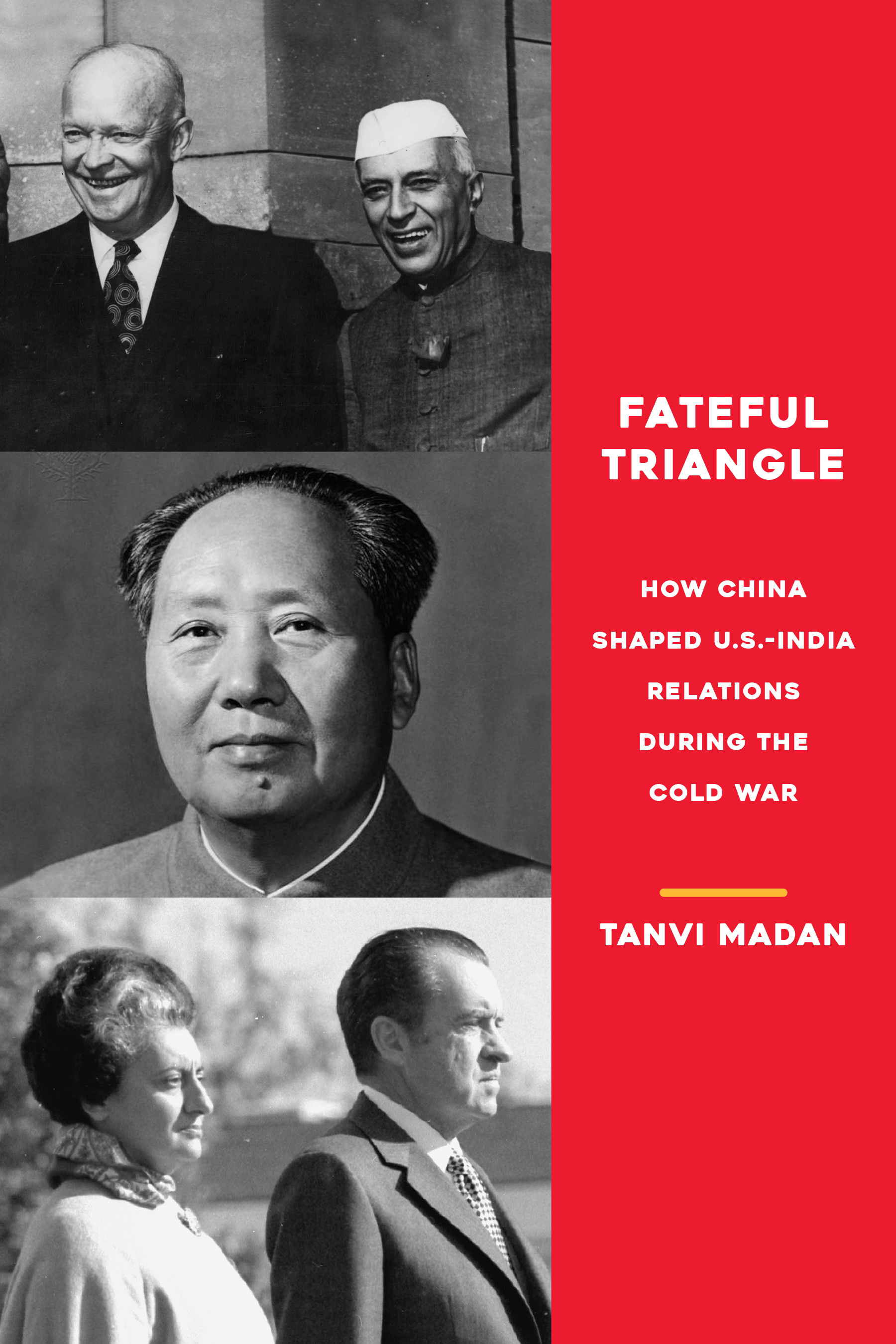
Fateful Triangle
Brookings Institution Press: In this Asian century, scholars, officials, and journalists are increasingly focused on the fate of the rivalry between China and India. They see the U.S.’s relationships with the two Asian giants as now intertwined, after having followed separate paths during the Cold War.In Fateful Triangle, Tanvi Madan argues that China’s influence on the U.S.-India relationship is neither a recent nor a momentary phenomenon. Drawing on documents from India and the United States, she shows that American and Indian perceptions of and policy toward China significantly shaped U.S.-India relations in three crucial decades, from 1949 to 1979. Fateful Triangle updates our understanding of the diplomatic history of U.S.-India relations, highlighting China’s central role in it; reassesses the origins and practice of Indian foreign policy and nonalignment; and provides historical context for the interactions between the three countries.Madan’s assessment of this formative period in the triangular relationship is of more than historic interest. A key question today is whether the United States and India can, or should, develop ever-closer ties as a way of countering China’s desire to be the dominant power in the broader Asian region. Fateful Triangle argues that history shows such a partnership is neither inevitable nor impossible. A desire to offset China brought the two countries closer together in the past, and could do so again. A look to history, however, also shows that shared perceptions of an external threat from China are necessary, but insufficient, to bring India and the United States into a close and sustained alignment. That requires agreement on the nature and urgency of the threat, as well as how to approach the threat strategically, economically, and ideologically.With its long view, Fateful Triangle offers insights for both present and future policymakers as they tackle a fateful, and evolving, triangle that has regional and global implications.{chop}
Books
08.06.14
China’s Second Continent
An exciting, hugely revealing account of China’s burgeoning presence in Africa—a developing empire already shaping, and reshaping, the future of millions of people. A prizewinning foreign correspondent and former New York Times bureau chief in Shanghai and in West and Central Africa, Howard French is uniquely positioned to tell the story of China in Africa. Through meticulous on-the-ground reporting—conducted in Mandarin, French, and Portuguese, among other languages—Howard French crafts a layered investigation of astonishing depth and breadth as he engages not only with policy-shaping moguls and diplomats, but also with the ordinary men and women navigating the street-level realities of cooperation, prejudice, corruption, and opportunity forged by this seismic geopolitical development. With incisiveness and empathy, French reveals the human face of China’s economic, political, and human presence across the African continent—and in doing so reveals what is at stake for everyone involved.We meet a broad spectrum of China’s dogged emigrant population, from those singlehandedly reshaping African infrastructure, commerce, and even environment (a self-made tycoon who harnessed Zambia’s now-booming copper trade; a timber entrepreneur determined to harvest the entirety of Liberia’s old-growth redwoods), to those just barely scraping by (a sibling pair running small businesses despite total illiteracy; a karaoke bar owner–cum–brothel madam), still convinced that Africa affords them better opportunities than their homeland. And we encounter an equally panoramic array of African responses: a citizens’ backlash in Senegal against a “Trojan horse” Chinese construction project (a tower complex to be built over a beloved soccer field, which locals thought would lead to overbearing Chinese pressure on their economy); a Zambian political candidate who, having protested China’s intrusiveness during the previous election and lost, now turns accommodating; the ascendant middle class of an industrial boomtown; African mine workers bitterly condemning their foreign employers, citing inadequate safety precautions and wages a fraction of their immigrant counterparts’.French’s nuanced portraits reveal the paradigms forming around this new world order, from the all-too-familiar echoes of colonial ambition—exploitation of resources and labor; cut-rate infrastructure projects; dubious treaties—to new frontiers of cultural and economic exchange, where dichotomies of suspicion and trust, assimilation and isolation, idealism and disillusionment are in dynamic flux.Part intrepid travelogue, part cultural census, part industrial and political exposé, French’s keenly observed account ultimately offers a fresh perspective on the most pressing unknowns of modern Sino-African relations: why China is making the incursions it is, just how extensive its cultural and economic inroads are, what Africa’s role in the equation is, and just what the ramifications for both parties—and the watching world—will be in the foreseeable future. —Knopf {chop}
Notes from ChinaFile
Notes from ChinaFile
05.07.26
‘Mapping Myself onto a Vine or a Fish’
Leise Hook is a cartoonist and illustrator who lives in Stockholm, Sweden. She grew up in Virginia and Michigan, and previously worked in art museums in New York and Beijing. Her cartoons appear in The New Yorker and elsewhere, and she has just...
Notes from ChinaFile
01.09.26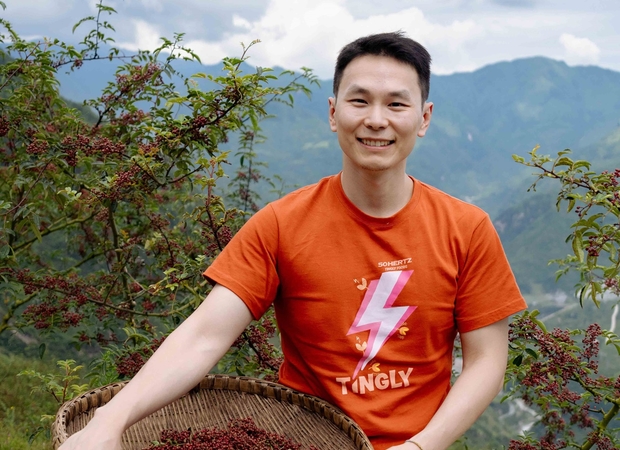
The Sichuan Pepper Guy
Yao Zhao is the founder of 50Hertz Tingly Foods, a company that sells Sichuan peppercorns (花椒, huajiao) and a variety of oils and snacks made with them. His first career was in clean energy development and rural electrification, but last year he...
More ChinaFile Stories
Viewpoint

Environment

Caixin Media
Environment
The China Africa Project